What "Reliable" Means for a SUP OEM Factory
A reliable OEM manufacturer is one that can be verified — you can check its production floor, its quality records and its certification documents — and one that behaves predictably: clear specifications, disciplined sampling, written commitments and no shortcuts on confidentiality. Everything below is what we would check if we were in your position.
1. Verify It Is Actually a Factory
The single biggest risk in SUP sourcing is not a bad factory — it is a trading company presenting itself as one. Red flags include: no floor photos or equipment lists, no willingness to schedule a video walkthrough, "minimum order quantities" that make no sense for a production plant, and catalogs that never name a specific production line.
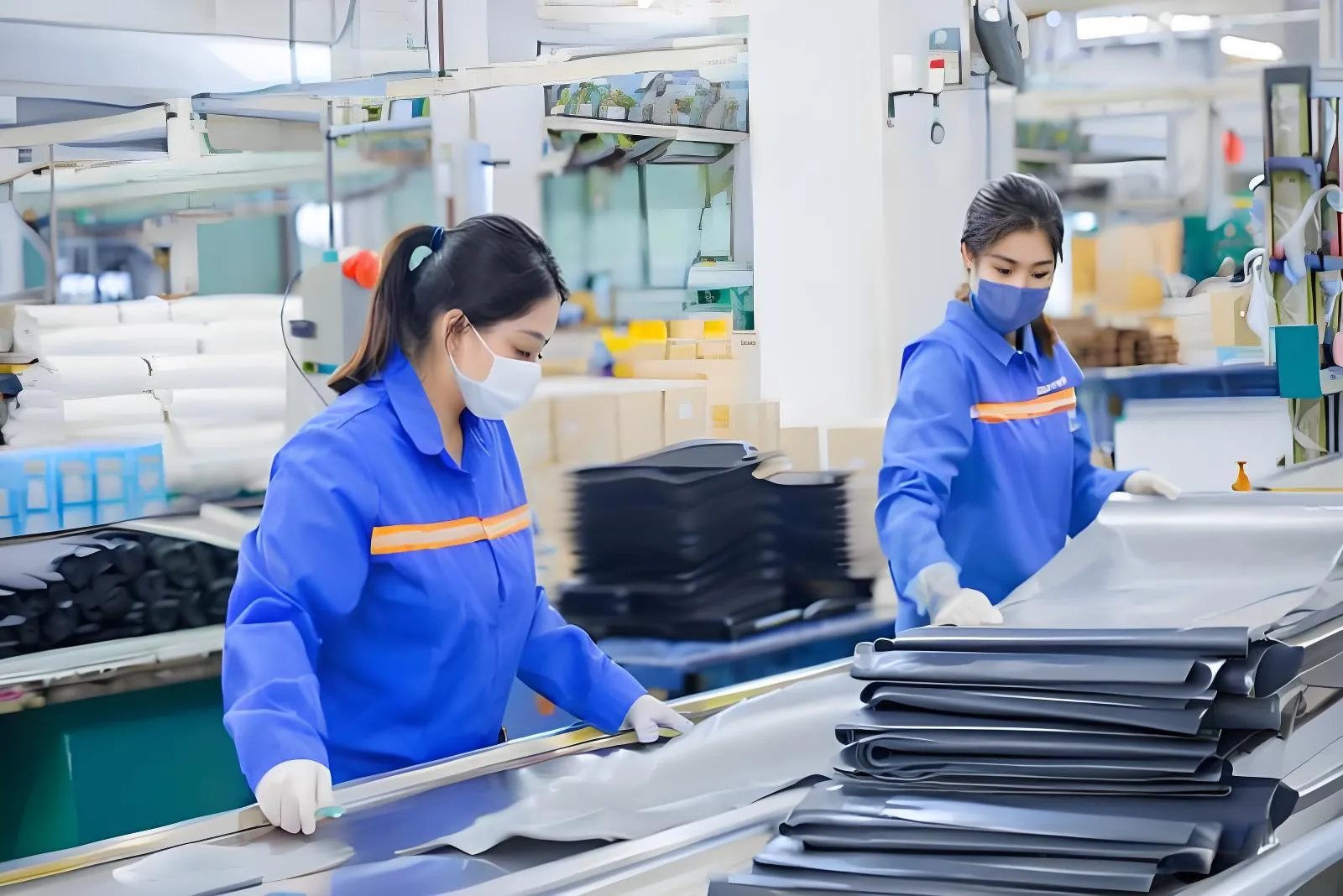
What a real factory can show you: a named manufacturing plant (with an address you can look up), equipment like RF welding machines and CNC drop-stitch cutting tables, a production capacity, and a floor you can tour on video before committing. We run a 12,500 m² plant in Qingdao with 350+ employees and a dedicated SUP production line — that kind of statement should be verifiable, not decorative.
2. Assess the Depth of Quality Control
Anyone can claim "strict QC." What matters is where the checks sit in the process:
- Incoming material QC — fabric rolls, drop-stitch material and valves checked before they enter the line.
- In-process checkpoints — seam strength and valve sealing verified during assembly, not after.
- Pressure hold test — every board inflated and held at pressure for a defined period before packing.
- Final inspection — visual, dimensional and inflation checks against the approved sample.
- Batch traceability — each batch tied to a production record you can request.
Ask for a sample QC record and a test-report template. A real factory has both; a trader does not.
3. Verify Certifications Are Real
ISO 9001, CE and BSCI are table stakes for an export-focused SUP factory, but certificates are also the easiest documents to counterfeit. Verify three things: the certificate number, the certifying body, and the scope of the certificate (it must cover inflatable water sports equipment manufacturing, not just "trading").
Also ask when the last factory audit happened and whether you may see the audit summary. In the EU market, your CE technical file links back to the manufacturer's production documentation — a gap here becomes your problem at border control.
4. Judge the Factory by Its Sample Behavior
How a factory handles sampling tells you more than its website. Watch for:
- Does it push back with engineering questions (load capacity, target weight, drop-stitch thickness) instead of just saying yes?
- Does sampling take 7–12 days as promised, with a documented sample-approval sheet?
- Does the production sample match the pre-production sample?
A factory that treats your sample as a contract — documented, measured, approved — is a factory you can scale with.
5. Check How It Handles Intellectual Property
Your designs, graphics and tooling are the most valuable thing you will hand over. A reliable partner signs an NDA before any file exchange and states in writing that your artwork, tooling and specification files remain your property and are never reused, resold or shown to another client. Walk away from any factory that treats confidentiality as negotiable.
6. Ask These 10 Questions
- Can we verify your factory address, floor photos and equipment list?
- How many SUP boards do you produce annually, and who audits your QC?
- Can you share a blank QC record and a pressure-test template?
- What is your sample lead time, and what does a sample cost?
- What is your production lead time after PO and deposit?
- Which certifications do you hold, with certificate numbers?
- Do you sign an NDA before receiving design files?
- Are the pressure ratings on your boards tested and documented per batch?
- What trade terms do you support (FOB, CIF, DDP)?
- Can we schedule an on-site or video audit during production?
Red Flags Summary
No production address, no QC paperwork, certificates you cannot verify, sample timelines that slip without explanation, and pressure to pay a large deposit before seeing a sample — any one of these is enough to keep looking. The right factory earns your order by being boringly verifiable, step by step.
FAQ
What is the difference between an OEM factory and a trading company? A factory owns the production floor — it can show you the plant, the equipment and the QC process, and it answers directly for quality. A trading company resells other factories' output and adds a layer of margin, delay and responsibility transfer. Verify the entity you are contracting with (legal name, address, photos) before exchanging files.
How many boards should I order for the first trial? Co-branding runs start at 5–10 pcs; pilot batches run 20–50 pcs. That volume is enough to validate construction, artwork and packaging on real production output without committing to a full batch — the standard volume tier is 90–100+ pcs per 150 m roll.
Can I audit the factory during production? Yes — reputable OEM partners support third-party inspection (DUPRO during production, PSI before shipment) and on-site or video audits. Ask about both options in writing before you place the PO.
Do you sign an NDA before receiving design files? Yes. We sign an NDA before reviewing non-public artwork, specifications or launch plans, and your files stay confidential project material.
Keep Reading
Related Reading
2026-08-16
Quality Records to Audit at an SUP OEM Factory: The 14 Checkpoints That Separate Real Systems from Paper
Which quality records a serious buyer inspects at an inflatable SUP OEM factory — from QIP and IQC lots to air-tightness logs, NCR closure and calibration registers, with the reverse-traceability drill.
2026-08-16
Sample vs Trial vs Mass Production for SUP Orders: When to Use Each
Sample, trial and mass production SUP orders compared: typical quantities, lead times and price ranges, and how to pick the right order stage for your business.
2026-08-15
Flexible Co-Branding SUP — Small-Batch Branding Without Standard MOQs
How small-batch SUP co-branding works: fixed shell and shape specs on proven platforms, your logo screen-printed in secondary positions — no standard-volume MOQ.
Need this built under your own brand?
Tell us your project and we reply with MOQ, sample timing and lead times for your market — no commitment.